What Are Branded Residences in India? An Honest Guide
A brand on the gate doesn't make a better home. Here's how branded residences really work, and how to tell if one is worth the premium.
"Branded residence" is one of those phrases that gets used a lot and explained very little. You've probably seen it attached to a famous name and a price tag that's a notch above the neighbourhood. So what are you actually buying? A logo? A lifestyle? Or a genuinely better home?
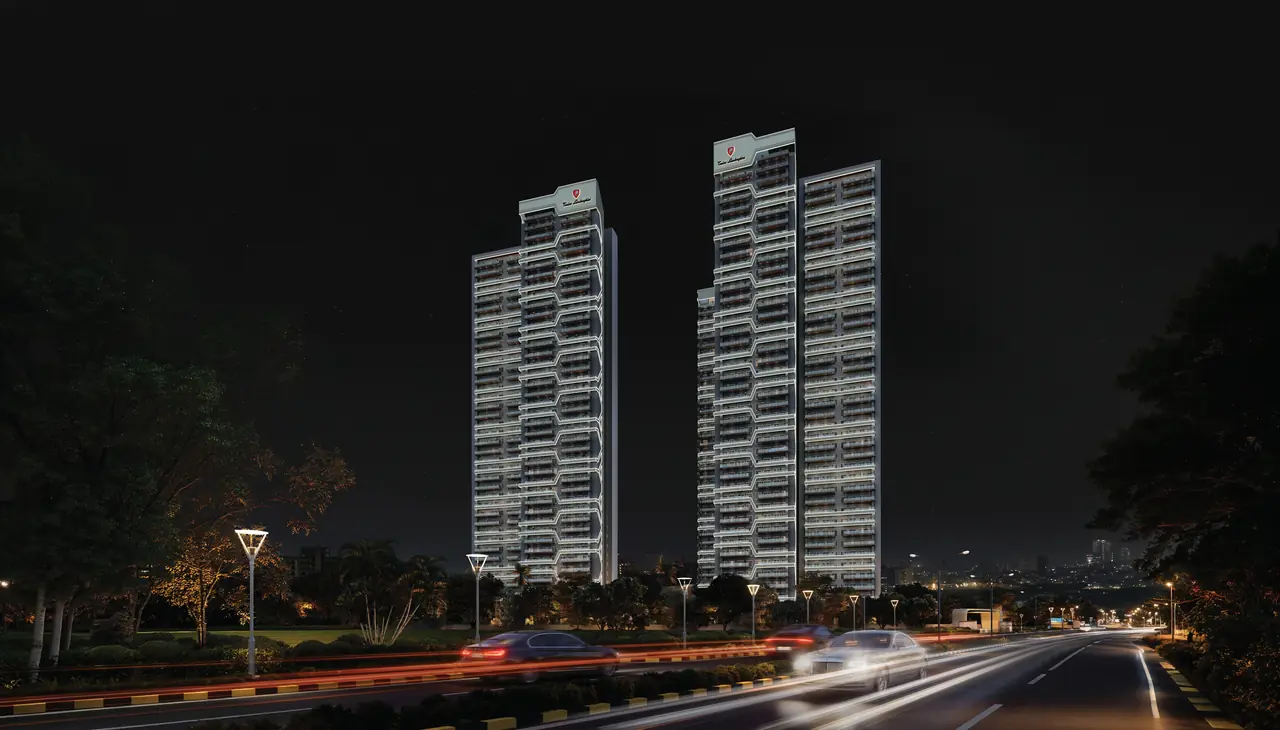
The honest answer is that it depends on the project. Some branded residences are thoughtfully designed homes with a clear point of view. Others are ordinary buildings with a name stuck on the gate. This guide will help you tell the difference, using Tonino Lamborghini Residences Gurugram as a worked example.
What a branded residence actually is
At its simplest, a branded residence is a residential project developed in partnership with a recognised brand from outside traditional real estate. The brand lends its name, design language and sometimes its standards. The developer buys the land, gets the approvals, builds the towers and sells the homes.
The idea started with hotel groups. For decades, luxury hotel brands have attached their names to private residences, often next to or inside a hotel, with hotel-style services on tap. Over time, fashion houses, car makers and design brands joined in. Today you'll find residences carrying names from the worlds of fashion, watches, automobiles and interiors in cities like Miami, Dubai and London.
India is newer to this. A Savills report cited by Signature Global projects around 25 ultra-luxury branded residential projects in India by 2032, which would place India among the world's top 10 branded-residence markets. So the category is growing here, and you'll see more of these launches in the coming years. That's precisely why it's worth understanding how they work.
Who does what: the brand and the developer
This is the single most important thing to understand, and it's where a lot of buyers get confused.
In most branded residences, the brand does not build your home. It licenses its name and design input to a developer, who carries the responsibility for delivery. The legal arrangement is usually a licence agreement that sets out how the brand can be used and what standards the developer must meet.
Here's how it works at Tonino Lamborghini Residences Gurugram:
| Role | Who | What that means for you |
|---|---|---|
| Developer and promoter | Signatureglobal (India) Limited, listed on NSE and BSE | Responsible for construction, approvals, sales and delivery. Your agreement is with them. |
| Brand licensor | Tonino Lamborghini S.p.A., under a Trademark Licence Agreement | Provides the brand and design direction for the facade, lobbies and common areas |
| Creative direction | Angela Krieger, Tonino Lamborghini Total Living | Shapes the overall brand expression in the spaces |
| Architecture and landscape | Handel Architects (New York), Bose Brothers Architects, PL Design (Thailand), S Bose | Master planning, buildings and landscape |
| Interiors | Carlos Rossi | Interior design input |
The practical takeaway is this. When you evaluate a branded residence, you're mostly evaluating the developer. The brand affects how the place looks and feels. The developer affects whether it gets built well and handed over properly.
What you're really paying the premium for
Branded residences usually cost more than comparable unbranded homes nearby. I won't quote a percentage, because it varies widely by project and city, and any neat number you see online is a generalisation. What I can do is break down where that premium tends to go, so you can judge whether it's worth it.
Design with a point of view
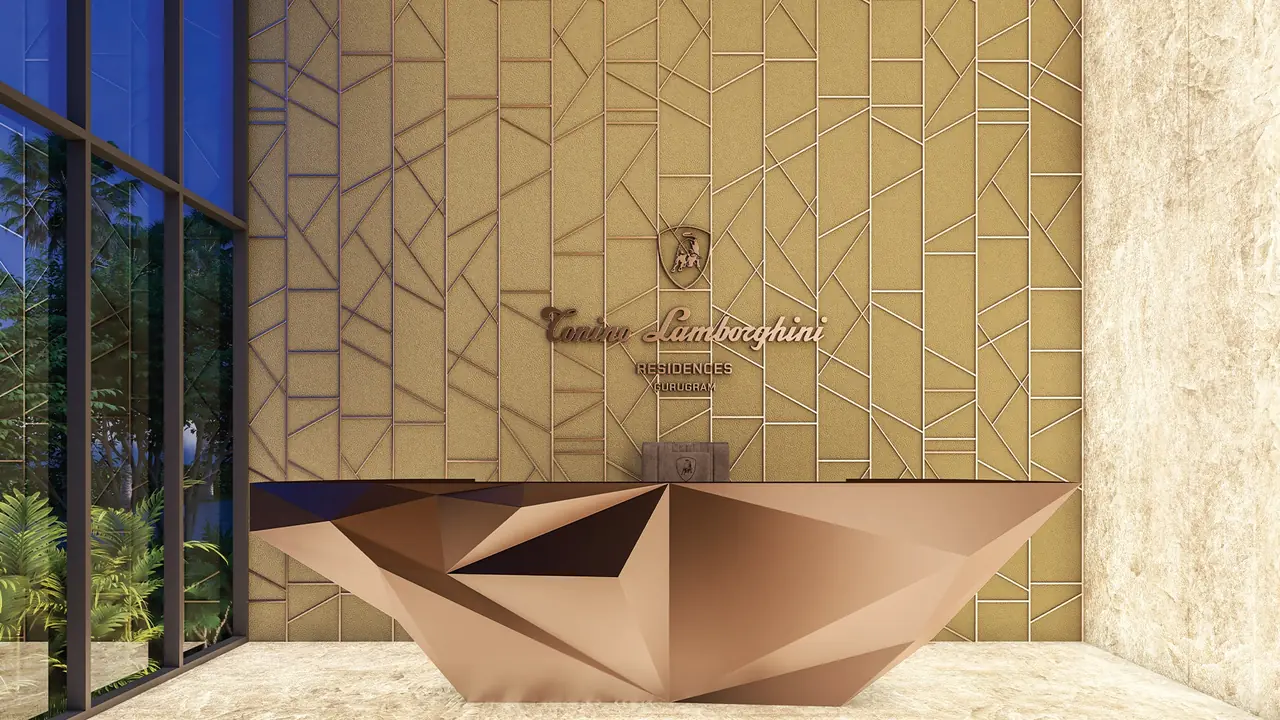
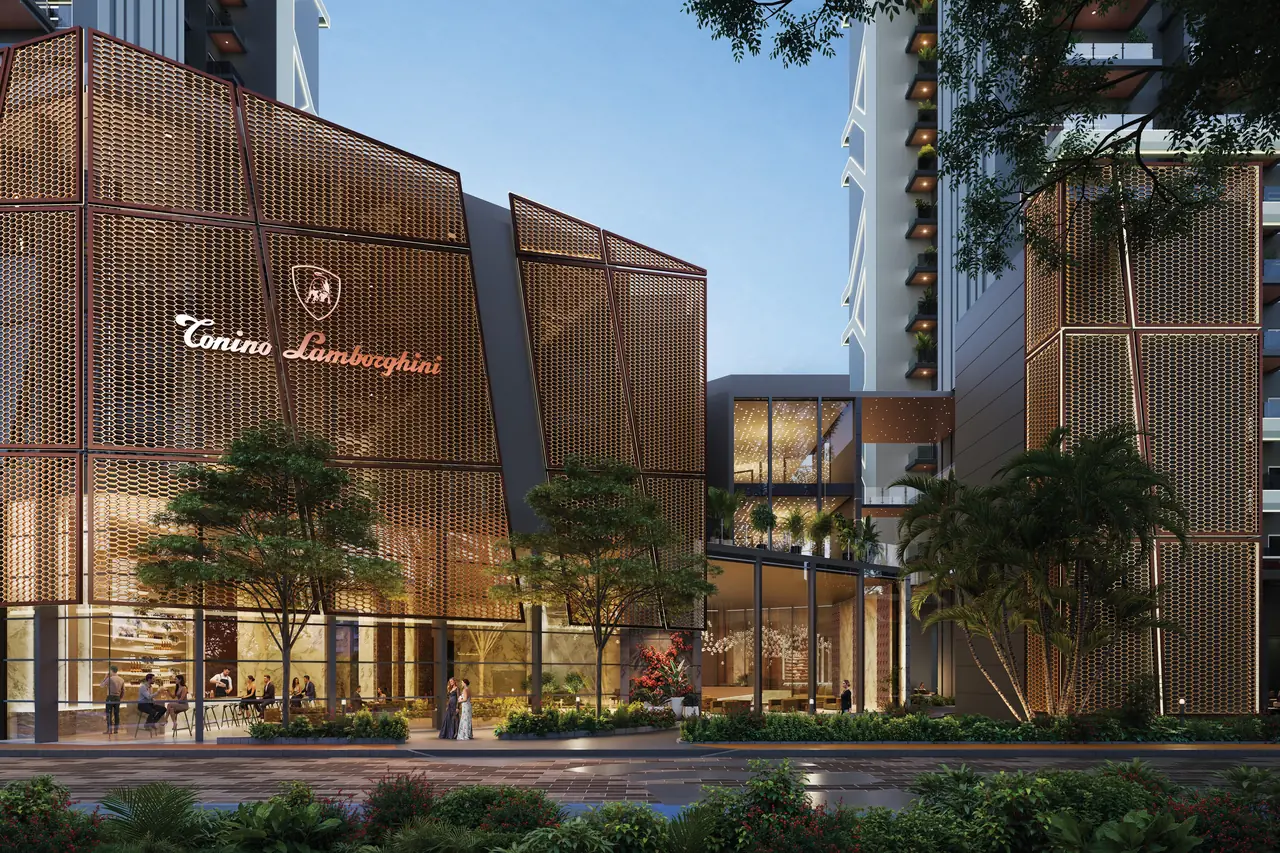
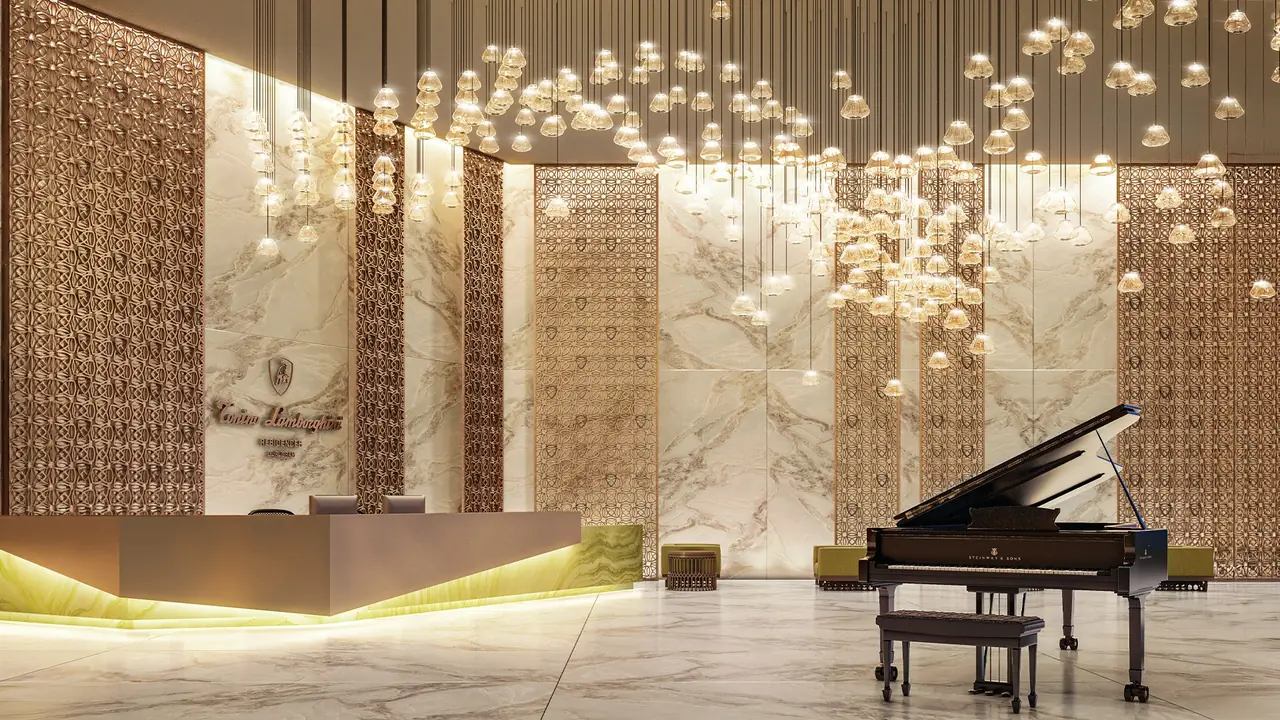
A good brand brings a consistent design language. Tonino Lamborghini's is built around geometry, hexagons and faceted forms, copper and earthy tones, and rich materials. At this project, you see it in the tower lobbies: sculpted copper reception desks, geometric gold wall panels, faceted seating, and walnut-lined lift halls with bronze doors. That kind of detailing is expensive and hard to fake.
Amenities planned as a whole
The 1,00,000 sq ft clubhouse here includes a gym, yoga and meditation zen court, his and her saunas and spas, therapy rooms, a beauty salon and a sports bar with billiards. Outside, there are three swimming pools carrying the brand's signature, a red branded tennis court, a pickleball court, jogging and bicycle tracks, and themed gardens. You can browse the full list on our amenities page.
Scarcity and identity
This is India's first Tonino Lamborghini branded residence. For some buyers, that identity is part of the appeal, much like owning a particular watch. That's a legitimate reason to buy, as long as you're honest with yourself that it's an emotional one.
Expected resale appeal
Many buyers assume a branded home will be easier to resell. It might be, but it's not guaranteed. Resale depends on the overall market, the quality of delivery and how well the building is maintained over the years. Treat it as a possible bonus, not the reason you buy.
How to judge a branded residence
If you remember one thing from this article, let it be this: judge the project first, the brand second. Here's the checklist I'd use.
- Developer track record. Look at what the developer has delivered before, how close to schedule, and how those projects are holding up. A listed developer also publishes financial disclosures you can read.
- RERA registration. Check the registration on the state RERA portal. Here it's HRERA Registration RC/REP/HARERA/GGM/1056/788/2026/28, dated 08.04.2026, along with DTCP Licence No. 187 of 2025. RERA gives you a framework for disclosures, escrow of project funds and grievance redressal.
- Density. Divide the number of homes by the land area. This project has 812 residences on 12.40 acres, which works out to roughly 65 homes per acre. Compare that figure with other projects on your shortlist. Also look at homes per floor: four-to-a-core here means more privacy and less crowding at the lifts.
- Location. A brand can't fix a weak location. Sector 71 on the Southern Peripheral Road connects to Golf Course Road, Golf Course Extension Road, Sohna Road and NH-48. Some infrastructure on the brochure map, like the SPR Metro line, is still proposed, so value it accordingly. See the location page for details.
- Sustainability and build quality. Certifications are a useful signal. This project has an IGBC Platinum pre-certification, the highest rating from the Indian Green Building Council. Our piece on IGBC Platinum and four-to-a-core explains why both matter.
- What exactly the brand controls. This is the one most people skip, so it gets its own section below.
Pin down what the brand controls
"Designed by" can mean a lot or very little. Before you pay a premium, get clarity on where the brand's involvement starts and stops. At this project, Tonino Lamborghini designs the facade, lobbies and common areas. That's clear and it's substantial. But it's worth asking a few more questions, in writing if possible:
- Which finishes and fittings inside the apartment are part of the brand's specification, and which are the developer's standard?
- Does the brand have any role after handover, for example in how common areas are maintained or refreshed?
- Who manages the clubhouse and services, and what will maintenance cost?
- What happens to the branding if the licence arrangement changes in the future?
None of these are trick questions. A good sales team should answer them plainly. If the answers are vague, that tells you something too.
Tip: Ask for the specifications sheet that will be attached to your builder-buyer agreement and compare it against what you saw in the sample flat or brochure. What's in the agreement is what you're entitled to. What's in the brochure is a promise of intent.
The risks worth thinking about
Branded residences aren't riskier than other luxury projects, but they do carry a few specific ones:
- Paying for the name, not the home. If the brand's input is thin, you're paying extra for a logo.
- Higher running costs. Big clubhouses and premium common areas cost money to maintain. Expect maintenance charges to reflect that.
- Construction risk. Like any under-construction project, timelines can shift. The developer has not published a possession date here, so don't plan your life around a date someone mentions informally.
- Liquidity. At ₹4.80 Cr and above (indicative, before GST, stamp duty, registration and other charges), the pool of resale buyers is smaller than for mid-market homes. Selling can take time.
Who it suits, and who it doesn't
It suits you if
You value design and want a home with a distinct character. You'll genuinely use a large clubhouse and wellness facilities. You're comfortable with a long-term hold and with higher maintenance costs. And you like the idea of living in a building that feels like a single, considered piece of design rather than a collection of flats.
It probably doesn't suit you if
You're purely chasing the lowest price per square foot. You want a ready home right now. Or you're stretching your finances to the limit in the hope of a quick resale profit. In those cases, you're likely better served by a different kind of project, and there's no shame in that.
Where to go from here
Branded residences in India are still early, and that cuts both ways. There's novelty and genuine design ambition, but also a need for buyers to ask sharper questions. If you do the homework above, you'll know quickly whether a project deserves the premium.
If you'd like to see how Tonino Lamborghini Residences holds up against that checklist, read more about the project or book a site visit at the Sector 71 sales gallery. Bring your questions, especially the awkward ones.