The Tonino Lamborghini Brand Story: From Bologna to Gurugram
Not the car company, but a story worth knowing: how Tonino Lamborghini's design language shapes the homes rising in Gurugram's Sector 71.
Say "Lamborghini" to almost anyone and they picture a low, loud supercar in a shade of green you wouldn't paint your house. So when clients hear about Tonino Lamborghini Residences in Gurugram, the first question is usually the same: is this the car company?
No, it isn't. And the real story is more interesting than a badge on a building. Let's clear up the confusion, then talk about what the brand stands for and what it actually means for the home you'd live in.
Tonino Lamborghini is not the car company
Here's the short version. Automobili Lamborghini, the supercar maker, is one company. Tonino Lamborghini is a separate luxury lifestyle brand. They share a family name and a history, but they are different businesses.
The car company today is part of a large German automotive group. The Tonino Lamborghini brand is its own enterprise, with its own design studio, its own products and its own licensing partners around the world.
So when you see "Tonino Lamborghini Residences", read it as a lifestyle and design brand putting its name to a residential project. You won't find a supercar in the parking lot as part of the deal. What you will find is a particular design sensibility, and we'll get to that shortly.
Ferruccio and Tonino: a father, a son and a bull
To understand the brand, you have to start with the father.
Ferruccio Lamborghini was a self-made industrialist from the Emilia-Romagna region of northern Italy. After the Second World War he built a successful business making tractors, and later moved into other industries. In the 1960s he started the sports car company that made the family name famous across the world. The popular story, told and retold in motoring circles, is that he went into cars partly because he felt he could do better than the established names of the day.
The charging bull became the family's emblem. Ferruccio's star sign was Taurus, and he had a well-known fondness for bulls and bullfighting, which is why so many of the cars carry names linked to that world.
Tonino is Ferruccio's son. He grew up around his father's factories and was steeped in that mix of engineering, ambition and Italian style. But rather than simply carry on the car business, he chose to build something of his own.
1981: a brand of his own
Tonino Lamborghini founded his brand in 1981. The idea was to take the family's spirit of bold Italian design and apply it to the wider world of everyday luxury, not just to machines.
He captured the thinking neatly in a line the brand still quotes:
"If I cannot give you Italy, I will give you its feeling!" — Tonino Lamborghini
That sentence tells you a lot. The brand isn't selling you an Italian address. It's trying to bottle a certain way of living, with confidence, craftsmanship and a bit of drama, and bring it to wherever you are.
Palazzo del Vignola: the home of the brand
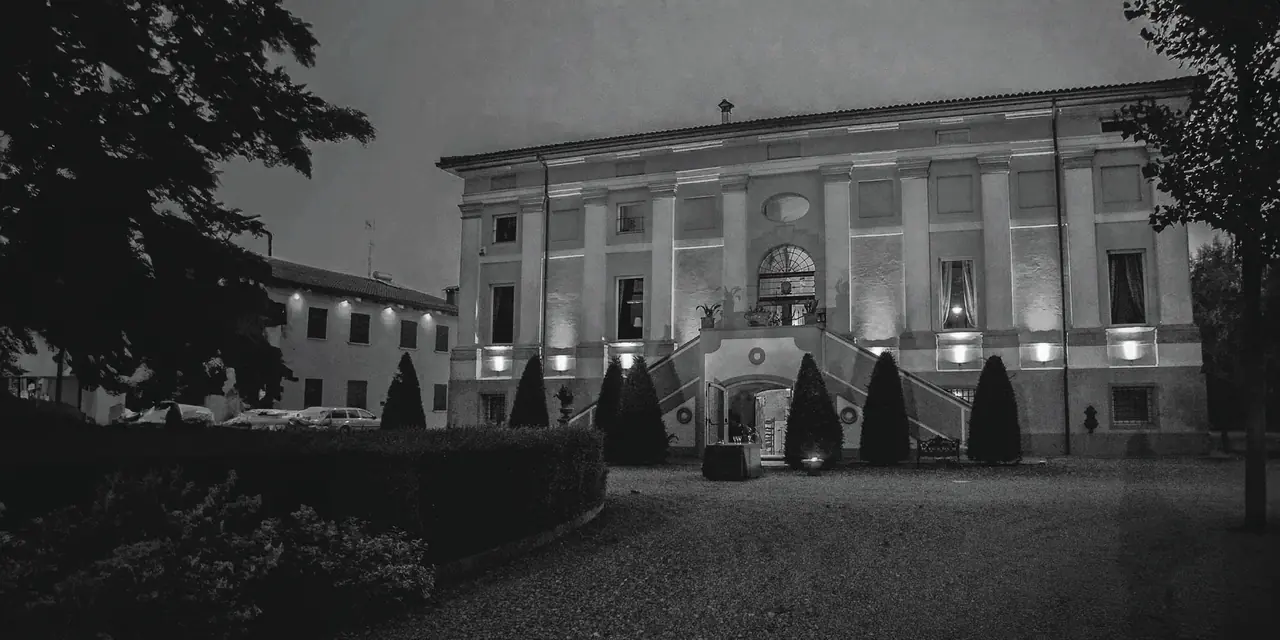
The brand's headquarters is the Palazzo del Vignola, a 16th-century villa near Bologna. That detail is worth pausing on.
Plenty of modern luxury brands run from glass towers. Choosing to base a design house in a centuries-old Italian villa says something about priorities. It signals respect for craft, for proportion and for things built to last. It also keeps the brand rooted in the same part of Italy where Ferruccio started out, a region known for its engineering, its food and its unhurried approach to the good life.
For you as a buyer, the villa itself doesn't change your floor plan. But it does help explain the brand's taste: a blend of old-world richness and modern, sharp-edged geometry.
What the brand makes today
Over four decades, Tonino Lamborghini has grown well beyond a single product line. Today the brand spans:
- Watches
- Eyewear
- Bags and leather goods
- Jewellery
- Hospitality
- Luxury beverages
- Total Living, the brand's interiors arm
- Real estate
The last two are the ones that matter here. Total Living is where the brand thinks about spaces rather than objects: furniture, finishes, lobbies and lounges. Real estate is the natural next step, taking that thinking and applying it to whole buildings.
That's an important point. Branded residences only make sense when the brand has a genuine design point of view about how spaces should feel. If you'd like the bigger picture on how this category works in India, our guide to what branded residences are is a good place to start.
The design language, in plain terms
Every serious design brand has a vocabulary, a set of shapes, materials and colours it keeps returning to. Tonino Lamborghini's is quite easy to recognise once you know what to look for.
Geometry
Hexagons, faceted forms and sharp, angular lines. Look at the brand's watches or furniture and you'll see these shapes again and again. It's a nod to the engineering heritage, precise and a little bit aggressive in the best sense.
Copper and earthy tones
Copper is the signature material. It's warm, it ages with character and it reads as luxurious without being flashy the way gold sometimes can. It sits alongside earthy, grounded colours rather than cold whites and greys.
Rich materials
Think walnut, bronze, stone and leather. Materials that feel good to touch and look better with time. This is the Italian craftsman's instinct showing through.
The charging bull
The family emblem appears as a mark of identity. Used well, it's a signature rather than a sticker.
How that language shows up at the Gurugram project
This is the part we'd want to see if we were buying, because it's where the brand either earns its place or doesn't. In Gurugram, the brand has designed the facade, lobbies and common areas. Here's how the vocabulary translates.
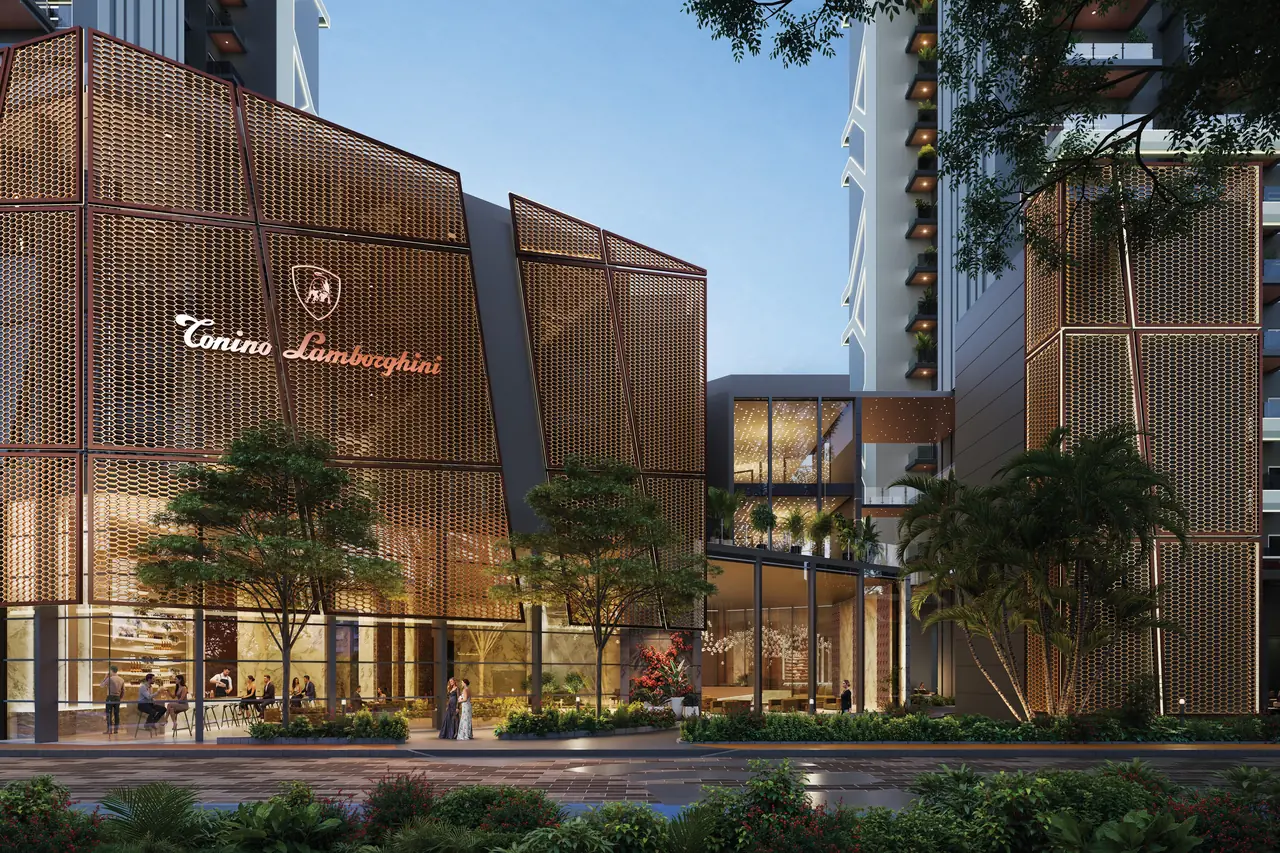
- The facade: copper mesh detailing on the exterior, so the brand's signature material is visible from the street, not hidden inside.
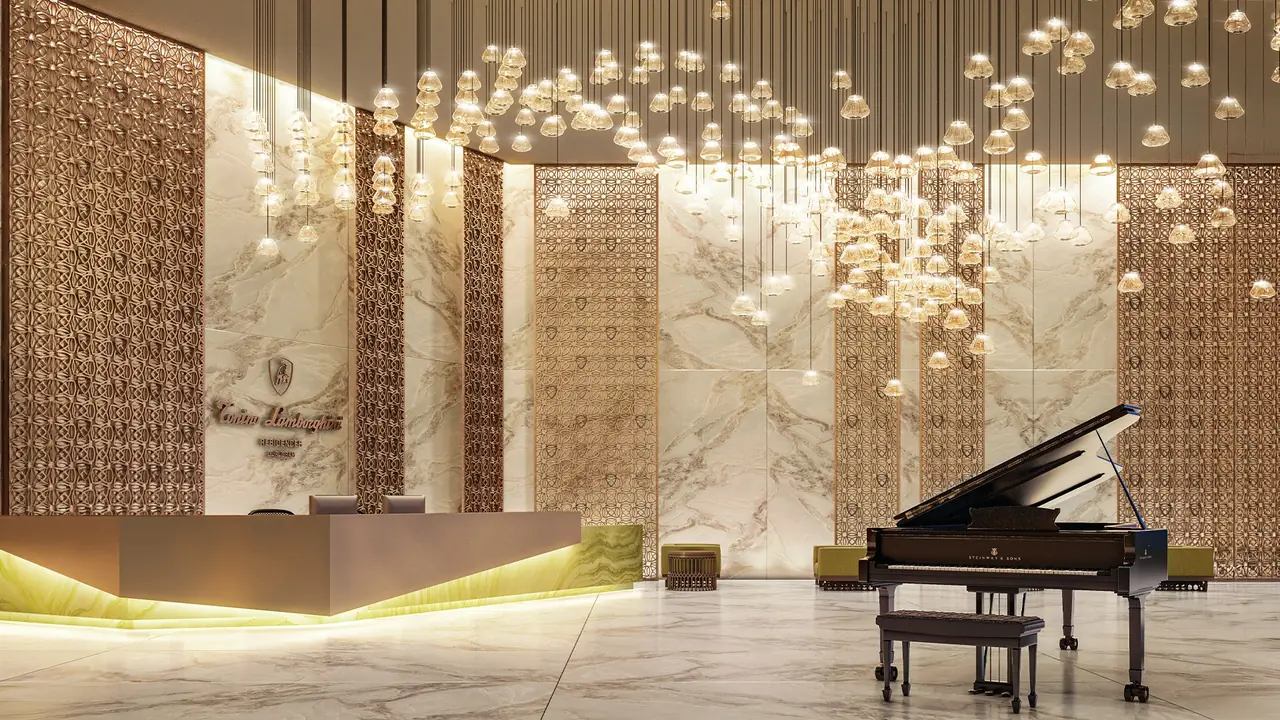
- Tower lobbies: a sculpted copper reception desk, geometric gold wall panels and faceted seating. That's the geometry and copper story in one room.
- Lift halls: walnut-lined, with bronze doors. Rich materials you'll touch every single day.
- The clubhouse: a grand reception lobby with a grand piano and glass-droplet chandeliers, and a club lobby with a water feature. The therapy rooms include a copper soaking tub.
- Branded outdoor spaces: three swimming pools carrying the brand signature, and a tennis court finished in the brand's red.
The clubhouse itself runs to around 1,00,000 sq ft. You can see the full list of spaces on our amenities page, and the design shows up well in the gallery.
Our honest view? The lobbies and lift halls matter more than people expect. You'll walk through them twice a day for years. Getting those right is what makes a brand feel present in your life rather than just on the brochure.
The global design team behind it
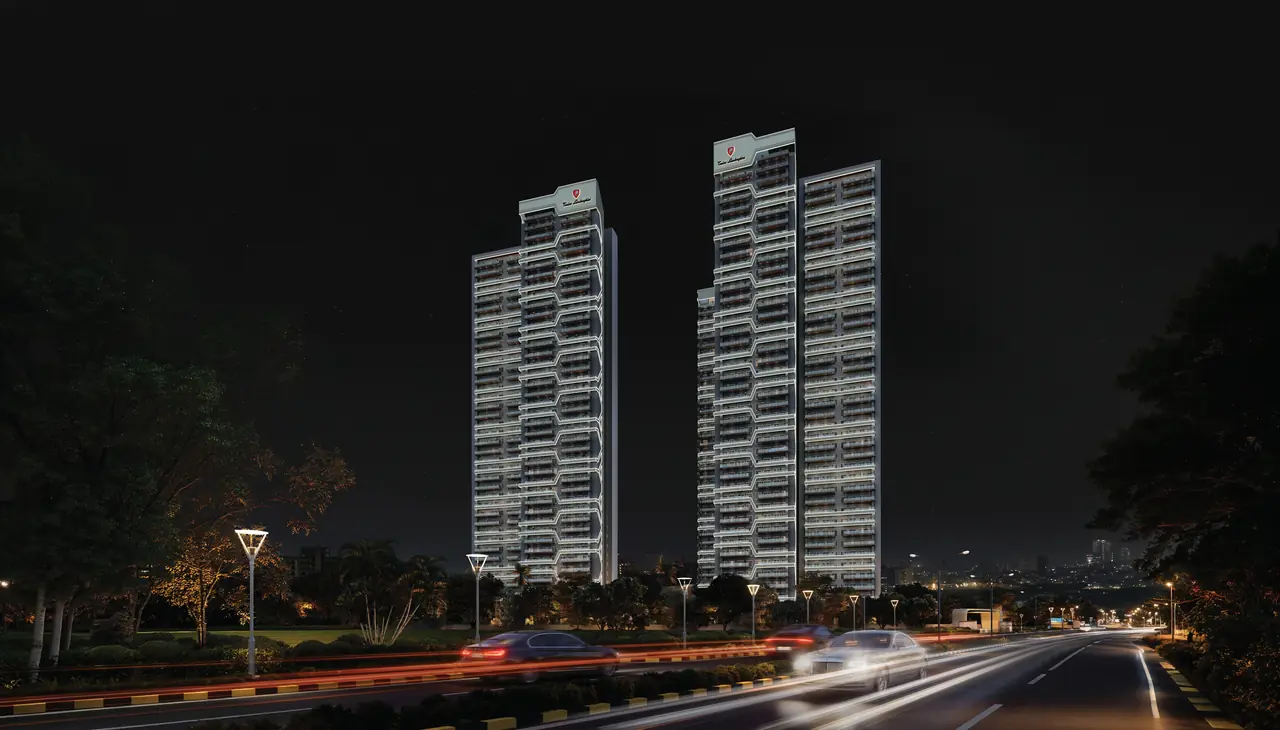
A brand alone doesn't design a 12.40-acre development with five G+41 towers. It takes a team, and this one is genuinely international:
| Role | Who |
|---|---|
| Creative Direction | Angela Krieger, Tonino Lamborghini Total Living |
| Principal Architect | Handel Architects, New York |
| Executive Architect | Bose Brothers Architects, with six decades of practice in India |
| Principal Landscape Designer | PL Design, Thailand |
| Landscape Designer | S Bose |
| Interior Designer | Carlos Rossi, 25+ years across four continents |
What we like about this mix is the balance. You have global names setting the creative direction and architecture, and an Indian executive architect with deep local experience making sure it all works in the realities of Gurugram: the climate, the regulations and the way Indian families actually use their homes.
Why an Italian brand partners with an Indian developer
This project is India's first Tonino Lamborghini branded residences. It's being developed by Signatureglobal (India) Limited, a listed company on the NSE and BSE, under a Trademark Licence Agreement with Tonino Lamborghini S.p.A.
That structure is common in branded residences worldwide. The brand brings design, identity and standards. The developer brings land, approvals, construction and local know-how. Neither could do the whole thing well alone.
Why India, and why now? Luxury housing demand in India's big cities has grown, and buyers have become more global in their tastes. A Savills report cited by Signature Global projects around 25 ultra-luxury branded residential projects in India by 2032, which would place India among the world's top 10 branded-residence markets. For an international brand, being early in a market like that makes sense.
For a developer, the partnership offers something harder to build alone: a design identity that stands apart in a crowded luxury market.
What it means for you, day to day
Let's bring this back to everyday life, because that's what you're actually buying.
A brand name doesn't make the lift faster or the commute shorter. What it can do is set a higher bar for the spaces you share with your neighbours: the arrival, the lobby, the clubhouse, the pools. It brings a consistent design point of view across the whole project, so it doesn't feel like a collection of unrelated choices.
It's also worth being clear about what the brand doesn't do. It doesn't replace the basics. The things you should still check carefully are the same as for any project:
- Approvals and registration. Here, the project is HRERA registered (RC/REP/HARERA/GGM/1056/788/2026/28) and holds DTCP Licence No. 187 of 2025.
- Layouts and space. Look at the floor plans and ask how each room will actually be used.
- Full costs and the payment plan, not just the headline price.
- Possession timelines. A possession date hasn't been published yet, so ask for it in writing when it is.
A few other things support the quality story beyond the brand: around 12 ft ceilings, four apartments per core, IGBC Platinum pre-certification and a 5-tier security setup. These are the details that shape how a home feels after the novelty of the name wears off.
The bottom line
Tonino Lamborghini is a design brand with a real family story, a clear visual language and four decades of applying it to how people live. In Gurugram, you can see that language in the copper, the geometry and the materials, right from the facade to the lift hall.
Whether that's worth it to you is a personal call. Our suggestion is simple: come and see it. Touch the materials, walk through the spaces and ask us the hard questions. You can book a no-obligation visit to the Sector 71 sales gallery through our contact page, or call or WhatsApp us on +91 98114 78909.